
The evaluation of national and international development projects faces increasing pressure to provide robust evidence of impact while simultaneously offering rich, contextualized explanations of how and why change occurs. Traditional mono-method approaches, whether purely quantitative or qualitative, often fall short of meeting this dual mandate, particularly in complex social interventions. This article aims to address this gap by providing a scholarly yet practical guide for evaluators on the systematic application of mixed methods research (MMR) designs across the entire evaluation lifecycle of the project, i.e., baseline, midline, and endline. We define the conceptual foundations of MMR in development contexts, detail a typology of designs (convergent, sequential, embedded, longitudinal), and offer a stage-specific framework for their application. Emphasis is placed on the critical process of integration from data collection to analysis, using techniques such as joint displays and narrative causal explanations. Furthermore, we provide in-depth guidance on tool development, sampling strategies, and the integrated reporting of findings. This study discusses the challenges of conducting longitudinal Mixed Methods Evaluations and the ethical issues surrounding these evaluations. We will also look at some of the implications that this type of evaluation has for donors, evaluators, and future research in methodology. This study is designed to provide practical applications and examples to help improve the quality, relevance, and usefulness of those who evaluate development work.
| Published in | Research and Innovation (Volume 2, Issue 2) |
| DOI | 10.11648/j.ri.20260202.14 |
| Page(s) | 129-143 |
| Creative Commons |
This is an Open Access article, distributed under the terms of the Creative Commons Attribution 4.0 International License (http://creativecommons.org/licenses/by/4.0/), which permits unrestricted use, distribution and reproduction in any medium or format, provided the original work is properly cited. |
| Copyright |
Copyright © The Author(s), 2026. Published by Science Publishing Group |
Mixed-methods Evaluation, Longitudinal Evaluation Design, Development Project Evaluation, Evaluation Lifecycle (or Project Lifecycle), Data Integration
BL | Baseline |
DiD | Difference-in-Differences |
EL | Endline |
FGD | Fixed Group Discussion |
KII | Key Informant Interviews |
ML | Midline |
MME | Mix Methods Evaluation |
MMR | Mixed Methods Research |
RCTs | Randomized Controlled Trials |
ToC | Theory of Change |
QUAL | Qualitative |
QUAN | Quantitative |
| [1] |
Woolcock, M. (2019). Reasons for Using Mixed Methods in the Evaluation of Development Projects. Harvard University.
https://dash.harvard.edu/bitstreams/b9b0f999-1c82-4bae-81e5-3858beae6268/download |
| [2] | Copestake, J. (2024). Mixed-methods impact evaluation in international development practice. Bath SDR. |
| [3] | White, H. (2009). Theory-based impact evaluation: Principles and practice. Journal of Development Effectiveness, 1(3), 229–249. |
| [4] | Ravallion, M. (2009). Evaluation in the practice of development. The World Bank Research Observer, 24(1), 29–53. |
| [5] | Bryman, A. (2006). Integrating quantitative and qualitative research: How is it done? Qualitative Research, 6(1), 97–113. |
| [6] |
Creswell, J. W., & Plano Clark, V. L. (2018). Designing and Conducting Mixed Methods Research (3rd ed.). SAGE Publications.
https://us.sagepub.com/en-us/nam/designing-and-conducting-mixed-methods-research/book246106 |
| [7] | Fetters, M. D., Curry, L. A., & Creswell, J. W. (2013). Achieving Integration in Mixed Methods Designs—Principles and Practices. Health Services Research, 48(6pt2), 2134–2156. |
| [8] | Johnson, R. B., Onwuegbuzie, A. J., & Turner, L. A. (2007). Toward a definition of mixed methods research. Journal of Mixed Methods Research, 1(2), 112–133. |
| [9] |
Patton, M. Q. (2011). Developmental Evaluation: Applying Complexity Concepts to Enhance Innovation and Use. Guilford Press.
https://www.guilford.com/books/Developmental-Evaluation/Patton/9781609180024 |
| [10] | Tashakkori, A., & Teddlie, C. (2010). SAGE Handbook of Mixed Methods in Social & Behavioral Research. SAGE Publications. |
| [11] | Greene, J. C., Caracelli, V. J., & Graham, W. F. (1989). Toward a conceptual framework for mixed-method evaluation designs. Educational Evaluation and Policy Analysis, 11(3), 255–274. |
| [12] | Desalos, C. (2021). Mixed methods in monitoring and evaluation of international development projects: A practical guide. Wageningen University & Research. |
| [13] | Farquhar, M., et al. (2013). Mixed Methods Research in the Development and Evaluation of Complex Interventions. Palliative Medicine. |
| [14] | Guetterman, T. C., Fetters, M. D., & Creswell, J. W. (2015). Integrating Quantitative and Qualitative Results in Health Science Mixed Methods Research Through Joint Displays. Annals of Family Medicine, 13(6), 554–561. |
| [15] | Grand-Guillaume-Perrenoud, J. A., et al. (2023). Mixed Research as a Tool for Developing Quantitative Instruments. Journal of Mixed Methods Research. |
| [16] | Morgan, D. L. (1998). Practical strategies for combining qualitative and quantitative methods: Applications to health research. Qualitative Health Research, 8(3), 362–376. |
| [17] | McCrudden, M. T., & McTigue, E. M. (2021). Joint displays for mixed methods research in psychology. Methods in Psychology, 4, 100051. |
| [18] | Fetters, M. D., & Guetterman, T. C. (2023). Generating metainferences in mixed methods research: A seven-step process. Journal of Mixed Methods Research. |
| [19] | ILO. (2018). A step-by-step guide to impact evaluation. International Labour Organization. |
| [20] | Sale, J. E. M., et al. (2002). Revisiting the Quantitative-Qualitative Debate: Implications for Mixed-Methods Research. Quality & Quantity. |
| [21] | Schoonenboom, J. (2022). Developing the meta-inference in mixed methods research through successive integration of claims. The Routledge Handbook for Advancing Integration in Mixed Methods Research. |
| [22] |
Mertens, D. M. (2009). Transformative Research and Evaluation. Guilford Press.
https://www.guilford.com/books/Transformative-Research-and-Evaluation/Mertens/9781606233718 |
| [23] |
Mertens, D. M. (2017). Mixed Methods Design in Evaluation. SAGE Publications.
https://us.sagepub.com/en-us/nam/mixed-methods-design-in-evaluation/book245787 |
| [24] | Younas, A., et al. (2025). Framework for types of metainferences in mixed methods research. BMC Medical Research Methodology. |
| [25] | Pluye, P., & Hong, Q. N. (2014). Combining the Power of Qualitative and Quantitative Research: A Methodological Study of Mixed Methods Reviews. Annual Review of Public Health, 35, 29–45. |
| [26] | Onwuegbuzie, A. J., & Collins, K. M. T. (2007). A typology of mixed methods sampling designs in social science research. The Qualitative Report, 12(2), 281–316. |
| [27] | Rogers, P. J. (2008). Using Programme Theory to Evaluate Complicated and Complex Aspects of Interventions. Evaluation. |
| [28] | Bazeley, P. (2018). Integrating data analyses in mixed methods research. SAGE Handbook of Mixed Methods in Social & Behavioral Research, 437–456. |
| [29] | Quisumbing, A. R., et al. (2024). A synthesis of mixed methods impact evaluations from the agricultural development sector. Journal of Rural Studies. |
| [30] | Kamei, T., et al. (2022). Prospective fully longitudinal mixed methods evaluation of health literacy changes. Journal of Mixed Methods Research. |
| [31] |
Sandelowski, M. (2000). Combining qualitative and quantitative sampling, data collection, and analysis techniques in mixed-method studies. Research in Nursing & Health, 23(3), 246–255.
https://doi.org/10.1002/1098-240x(200006)23:3<246::aid-nur9>3.0.co;2-h |
| [32] |
Teddlie, C., & Tashakkori, A. (2009). Foundations of Mixed Methods Research. SAGE Publications.
https://us.sagepub.com/en-us/nam/foundations-of-mixed-methods-research/book228642 |
| [33] | Taylor, L. (2025). Transformative multilevel mixed methods design: A worked example in health services research. Methods in Psychology, 12, 100107. |
| [34] | Teddlie, C., & Yu, F. (2007). Mixed Methods Sampling: A Typology With Examples. Journal of Mixed Methods Research, 1(1), 77–100. |
| [35] | Watson, D. P., et al. (2020). A longitudinal mixed method approach for assessing implementation context and process. BMC Medical Research Methodology, 20(1), 294. |
| [36] | O'Cathain, A., et al. (2008). The quality of mixed methods studies in health services research. Journal of Health Services Research & Policy. |
| [37] | Sandelowski, M. (2003). Tables or tableaux? The challenges of writing and reading mixed methods studies. Handbook of Mixed Methods in Social & Behavioral Research. |
| [38] | Zhou, Y. (2019). A mixed methods model of scale development and validation analysis. Measurement: Interdisciplinary Research and Perspectives. |
| [39] |
International Rescue Committee. (2024). Monitoring and Evaluation Toolkit.
https://www.rescue.org/resource/monitoring-and-evaluation-toolkit |
| [40] |
Oxfam. (2024). Oxfam’s Guide to Monitoring and Evaluation.
https://policy-practice.oxfam.org/resources/oxfams-guide-to-monitoring-and-evaluation-620446/ |
| [41] | Creswell, J. W. (2015). A Concise Introduction to Mixed Methods Research. SAGE Publications. |
| [42] | Ivankova, N. V., et al. (2006). Using Mixed-Methods Sequential Explanatory Design: From Theory to Practice. Field Methods. |
| [43] | Morse, J. M. (1991). Approaches to qualitative-quantitative methodological triangulation. Nursing Research. |
| [44] | Save the Children. (2024). Monitoring, Evaluation, Accountability and Learning (MEAL) Handbook. |
| [45] | Plano Clark, V. L., & Ivankova, N. V. (2016). Mixed Methods Research: A Guide to the Field. SAGE Publications. |
| [46] | Yin, R. K. (2006). Mixed Methods Research: Are the Methods Genuinely Mixed or Merely Run in Parallel? Research in the Schools. |
| [47] | Schoonenboom, J., & Johnson, R. B. (2017). How to Construct a Mixed Methods Research Design. Kölner Zeitschrift für Soziologie und Sozialpsychologie. |
| [48] | Schumacher, K. L., et al. (2021). Methodological considerations for the design and implementation of a fully longitudinal mixed methods study. Research in Nursing & Health. |
| [49] | Wittink, M. N., et al. (2006). How to use mixed methods in health services research. Health Services Research. |
| [50] |
Albright, K., et al. (2013). Importance of Mixed Methods in Pragmatic Trials and Dissemination and Implementation Research. HYPERLINK "
https://doi.org/10.1016/j.acap.2013.06.010" \o "Persistent link using digital object identifier" \t "_blank" https://doi.org/10.1016/j.acap.2013.06.010 |
| [51] | Bamberger, M. (2012). Introduction to Mixed Methods in Impact Evaluation. InterAction. |
| [52] |
Bamberger, M., et al. (2010). RealWorld Evaluation: Working Under Budget, Time, Data, and Political Constraints. SAGE Publications.
https://us.sagepub.com/en-us/nam/realworld-evaluation/book233614 |
| [53] | IPA. (2024). Mixed Methods Research. |
| [54] |
White, H., & Sabarwal, S. (2014). Quasi-experimental Design and Methods. UNICEF Office of Research.
https://www.unicef-irc.org/publications/pdf/brief_8_quasi-experimental%20design_eng.pdf |
| [55] | Funnell, S. C., & Rogers, P. J. (2011). Purposeful Program Theory: Effective Use of Theories of Change and Logic Models. Jossey-Bass. |
| [56] |
Pawson, R., & Tilley, N. (1997). Realistic Evaluation. SAGE Publications.
https://www.scirp.org/reference/referencespapers?referenceid=2782576 |
| [57] |
Mayne, J. (2008). Contribution Analysis: An Approach to Exploring Cause and Effect. ILAC Brief No. 16.
https://www.cgiar-ilac.org/files/ILAC_Brief16_Contribution_Analysis.pdf |
| [58] |
BetterEvaluation. (2024). Mixed Methods.
https://www.betterevaluation.org/methods-approaches/approaches/mixed-methods |
| [59] |
3ie. (2024). Mixed Methods Impact Evaluation.
https://www.3ieimpact.org/evidence-hub/publications/working-papers/mixed-methods-impact-evaluation |
| [60] | World Bank. (2024). Impact Evaluation in Practice. |
| [61] | USAID. (2024). Mixed Methods in Evaluation. |
| [62] | OECD. (2024). Evaluating Development Co-operation. |
| [63] | UNDP. (2024). Handbook on Planning, Monitoring and Evaluating for Development Results. |
| [64] |
UNICEF. (2024). Methodological Briefs on Impact Evaluation.
https://www.unicef-irc.org/knowledge-pages/Methodological-Briefs-on-Impact-Evaluation/ |
| [65] | GIZ. (2024). Guidelines on Monitoring and Evaluation. |
| [66] |
DFID. (2024). Evaluation Policy.
https://www.gov.uk/government/publications/dfid-evaluation-policy-2013 |
| [67] |
J-PAL. (2024). Mixed Methods in Randomized Evaluations.
https://www.povertyactionlab.org/resource/mixed-methods-randomized-evaluations |
APA Style
Puri, P. K. (2026). Mixed Methods Design for the Evaluation of Development Projects Across Baseline, Midline, and Endline. Research and Innovation, 2(2), 129-143. https://doi.org/10.11648/j.ri.20260202.14
ACS Style
Puri, P. K. Mixed Methods Design for the Evaluation of Development Projects Across Baseline, Midline, and Endline. Res. Innovation 2026, 2(2), 129-143. doi: 10.11648/j.ri.20260202.14
@article{10.11648/j.ri.20260202.14,
  author = {Peshal Kumar Puri},
  title = {Mixed Methods Design for the Evaluation of Development Projects Across Baseline, Midline, and Endline},
  journal = {Research and Innovation},
  volume = {2},
  number = {2},
  pages = {129-143},
  doi = {10.11648/j.ri.20260202.14},
  url = {https://doi.org/10.11648/j.ri.20260202.14},
  eprint = {https://article.sciencepublishinggroup.com/pdf/10.11648.j.ri.20260202.14},
  abstract = {The evaluation of national and international development projects faces increasing pressure to provide robust evidence of impact while simultaneously offering rich, contextualized explanations of how and why change occurs. Traditional mono-method approaches, whether purely quantitative or qualitative, often fall short of meeting this dual mandate, particularly in complex social interventions. This article aims to address this gap by providing a scholarly yet practical guide for evaluators on the systematic application of mixed methods research (MMR) designs across the entire evaluation lifecycle of the project, i.e., baseline, midline, and endline. We define the conceptual foundations of MMR in development contexts, detail a typology of designs (convergent, sequential, embedded, longitudinal), and offer a stage-specific framework for their application. Emphasis is placed on the critical process of integration from data collection to analysis, using techniques such as joint displays and narrative causal explanations. Furthermore, we provide in-depth guidance on tool development, sampling strategies, and the integrated reporting of findings. This study discusses the challenges of conducting longitudinal Mixed Methods Evaluations and the ethical issues surrounding these evaluations. We will also look at some of the implications that this type of evaluation has for donors, evaluators, and future research in methodology. This study is designed to provide practical applications and examples to help improve the quality, relevance, and usefulness of those who evaluate development work.},
 year = {2026}
}
TY  - JOUR
T1  - Mixed Methods Design for the Evaluation of Development Projects Across Baseline, Midline, and Endline
AU  - Peshal Kumar Puri
Y1  - 2026/01/23
PY  - 2026
N1  - https://doi.org/10.11648/j.ri.20260202.14
DO  - 10.11648/j.ri.20260202.14
T2  - Research and Innovation
JF  - Research and Innovation
JO  - Research and Innovation
SP  - 129
EP  - 143
PB  - Science Publishing Group
UR  - https://doi.org/10.11648/j.ri.20260202.14
AB  - The evaluation of national and international development projects faces increasing pressure to provide robust evidence of impact while simultaneously offering rich, contextualized explanations of how and why change occurs. Traditional mono-method approaches, whether purely quantitative or qualitative, often fall short of meeting this dual mandate, particularly in complex social interventions. This article aims to address this gap by providing a scholarly yet practical guide for evaluators on the systematic application of mixed methods research (MMR) designs across the entire evaluation lifecycle of the project, i.e., baseline, midline, and endline. We define the conceptual foundations of MMR in development contexts, detail a typology of designs (convergent, sequential, embedded, longitudinal), and offer a stage-specific framework for their application. Emphasis is placed on the critical process of integration from data collection to analysis, using techniques such as joint displays and narrative causal explanations. Furthermore, we provide in-depth guidance on tool development, sampling strategies, and the integrated reporting of findings. This study discusses the challenges of conducting longitudinal Mixed Methods Evaluations and the ethical issues surrounding these evaluations. We will also look at some of the implications that this type of evaluation has for donors, evaluators, and future research in methodology. This study is designed to provide practical applications and examples to help improve the quality, relevance, and usefulness of those who evaluate development work.
VL  - 2
IS  - 2
ER  -
Development Studies, Kathmandu University, Lalitpur, Nepal
Biography: Peshal Kumar Puri is an MPhil scholar in Development Studies at Kathmandu University, Nepal. He holds a master’s degree in management and a Bachelor’s degree in Law from Tribhuvan University, giving him a strong academic foundation across development, management, and legal studies. He has more than ten years of professional experience with national and international development organizations, primarily in research, monitoring, and evaluation. His work focuses on data management, evaluation design, and applied research. Mr. Puri has led and contributed to over 40 evaluations and research studies across Nepal, as well as in several countries in Asia and Africa. He has extensive experience conducting complex mixed-methods and impact evaluations using both experimental and non-experimental approaches, including randomized controlled trials and quasi-experimental designs such as Difference-in-Differences (DiD), Regression Discontinuity (RDD), Propensity Score Matching (PSM), Instrumental Variables (IV), and Interrupted Time Series (ITS).

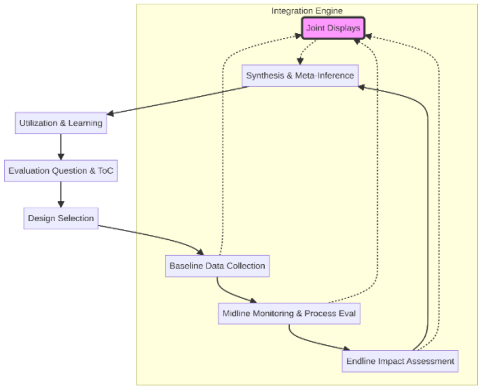
Figure 1. Mixed Methods Evaluation Lifecycle Framework depicting the cyclical nature of MME and the central role of the integration engine.
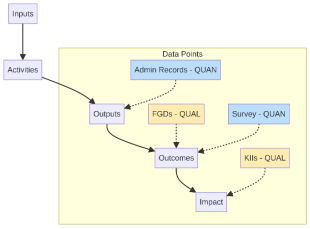
Figure 2. Theory of Change with Embedded Mixed Methods Data Points, mapping quantitative and qualitative data sources to causal links.
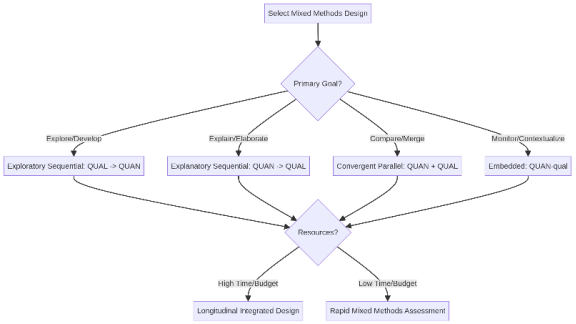
Figure 3. Decision Tree for Selecting Mixed Methods Designs in Development Evaluation based on primary goals and resource constraints.
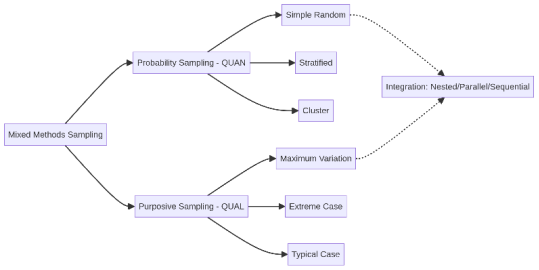
Figure 4. Longitudinal Sampling Transition Framework showing the evolution of QUAN and QUAL samples across BL-ML-EL stages.
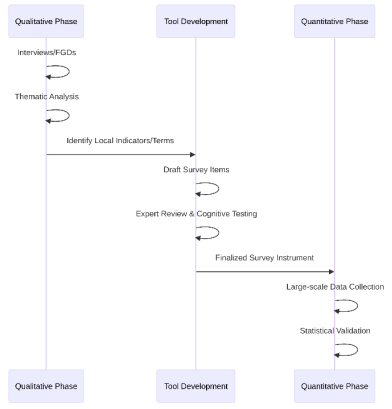
Figure 5. Tool Development Process illustrates how qualitative findings inform the creation and validation of quantitative instruments.
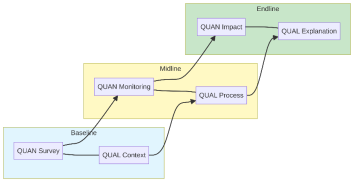
Figure 6. Longitudinal Mixed Methods Evaluation Pathway showing the tracking of quantitative and qualitative data across B-M-E stages.
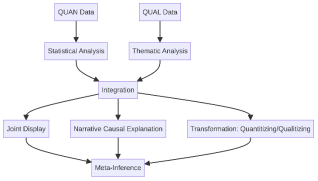
Figure 7. B-M-E Analysis Framework illustrating the specific analytical tasks at each stage and the overarching longitudinal integration.
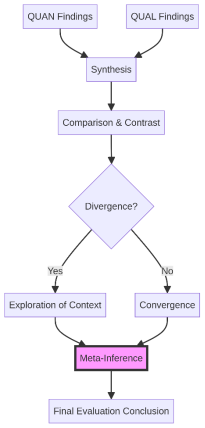
Figure 8. Meta-Inference Generation Process showing the path from separate findings to integrated evaluation conclusions.
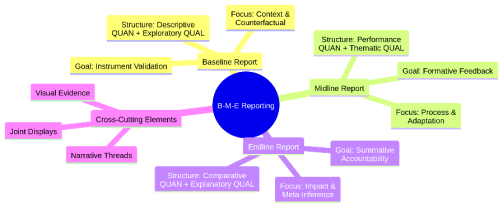
Figure 9. BL-ML-EL Reporting Structure highlighting the shifting focus and goals of reports across the lifecycle.
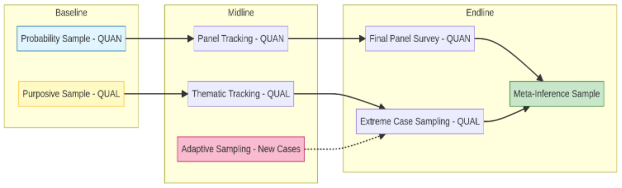
Figure 10. Mixed Methods Sampling Strategy Typology showing the integration of probability and purposive sampling.
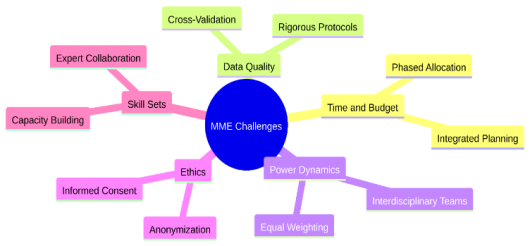
Figure 11. Practical Challenges and Mitigation Strategies in Mixed Methods Evaluation.
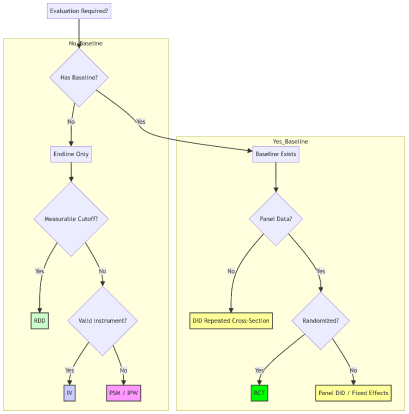
Figure 12. Impact Evaluation Design Decision Tree.
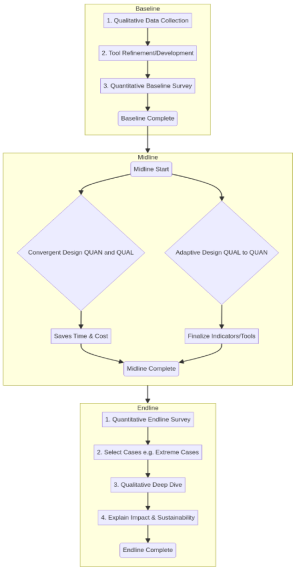
Figure 13. Strategic Mixed-Methods Sequencing for Longitudinal Evaluation.




 Share This Article
 Twitter
 Linked In
 Facebook
 Copy
Copy Download